


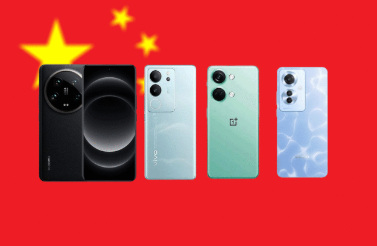
Chinese Brands Dominate Europe’s Booming Smartphone Market
Xiaomi, OPPO, and others capture massive market share as European consumers embrace value and innovation from the East
Europe’s smartphone landscape has undergone a dramatic transformation as Chinese manufacturers have surged from obscurity to dominance, fundamentally reshaping a market once controlled by American and South Korean giants. Brands like Xiaomi, OPPO, Realme, and others have capitalized on competitive pricing, innovative features, and aggressive marketing to capture the hearts—and wallets—of European consumers.
The Asian Invasion
The numbers tell a compelling story. Chinese smartphone brands now command over 40% of the European market, a stunning achievement considering their minimal presence just a decade ago. Xiaomi has been particularly successful, consistently ranking among the top three smartphone vendors across major European markets, while OPPO and its sub-brands have carved out significant niches in key countries including Spain, Italy, and France.
This expansion comes partly at the expense of established players. Samsung, while still leading in many markets, has seen its dominance eroded. More dramatically, Apple’s premium positioning has faced pressure in price-sensitive segments where Chinese brands offer comparable features at substantially lower prices. Even former European champions like Nokia, once a household name across the continent, have been relegated to niche status.
The Value Proposition
Chinese manufacturers have succeeded by offering exceptional value. Their smartphones frequently feature specifications that rival or exceed those of premium devices—high-refresh-rate displays, multiple camera systems, fast charging technology, and powerful processors—at prices that undercut competitors by 30% to 50%. For budget-conscious European consumers navigating economic uncertainty and inflation, this value equation has proven irresistible.
Innovation has also played a crucial role. Chinese brands have been quick to adopt cutting-edge technologies, often bringing them to market faster than Western competitors. Features like under-display fingerprint sensors, periscope zoom cameras, and ultra-fast charging debuted on Chinese phones before appearing on flagship devices from Samsung or Apple. This technological agility has helped shed the “cheap knockoff” stigma that initially plagued Chinese electronics.
Strategic Market Penetration
The success of Chinese brands isn’t accidental—it reflects sophisticated market strategies. These companies have invested heavily in European operations, establishing local offices, hiring regional talent, and tailoring products to European preferences and regulations. They’ve also leveraged partnerships with major telecommunications carriers, securing prominent shelf space and promotional support that builds brand visibility and credibility.
Sponsorships of popular European football clubs, music festivals, and cultural events have further boosted recognition among younger demographics. Xiaomi’s partnerships with AC Milan and OPPO’s sponsorship of UEFA tournaments exemplify this approach, associating Chinese brands with European cultural touchstones.
Challenges and Concerns
Despite their success, Chinese smartphone makers face significant headwinds. Geopolitical tensions between China and Western nations have raised security concerns, with some European countries scrutinizing Chinese technology companies for potential data privacy risks. The broader conversation about supply chain dependence and technological sovereignty has created an undercurrent of skepticism toward Chinese products.
Additionally, Huawei’s dramatic fall from grace following U.S. sanctions serves as a cautionary tale. Once poised to become Europe’s leading smartphone brand, Huawei’s market share collapsed after losing access to Google services and advanced semiconductor technology. This demonstrates the vulnerability of Chinese brands to geopolitical pressures beyond their control.
Looking Ahead
As Chinese brands consolidate their European presence, the competitive landscape continues evolving. European consumers have clearly demonstrated willingness to embrace alternatives to traditional Western brands, prioritizing features and value over heritage and origin. Whether this trend continues or faces nationalist backlash remains to be seen, but one thing is certain: the European smartphone market will never look quite the same again.

